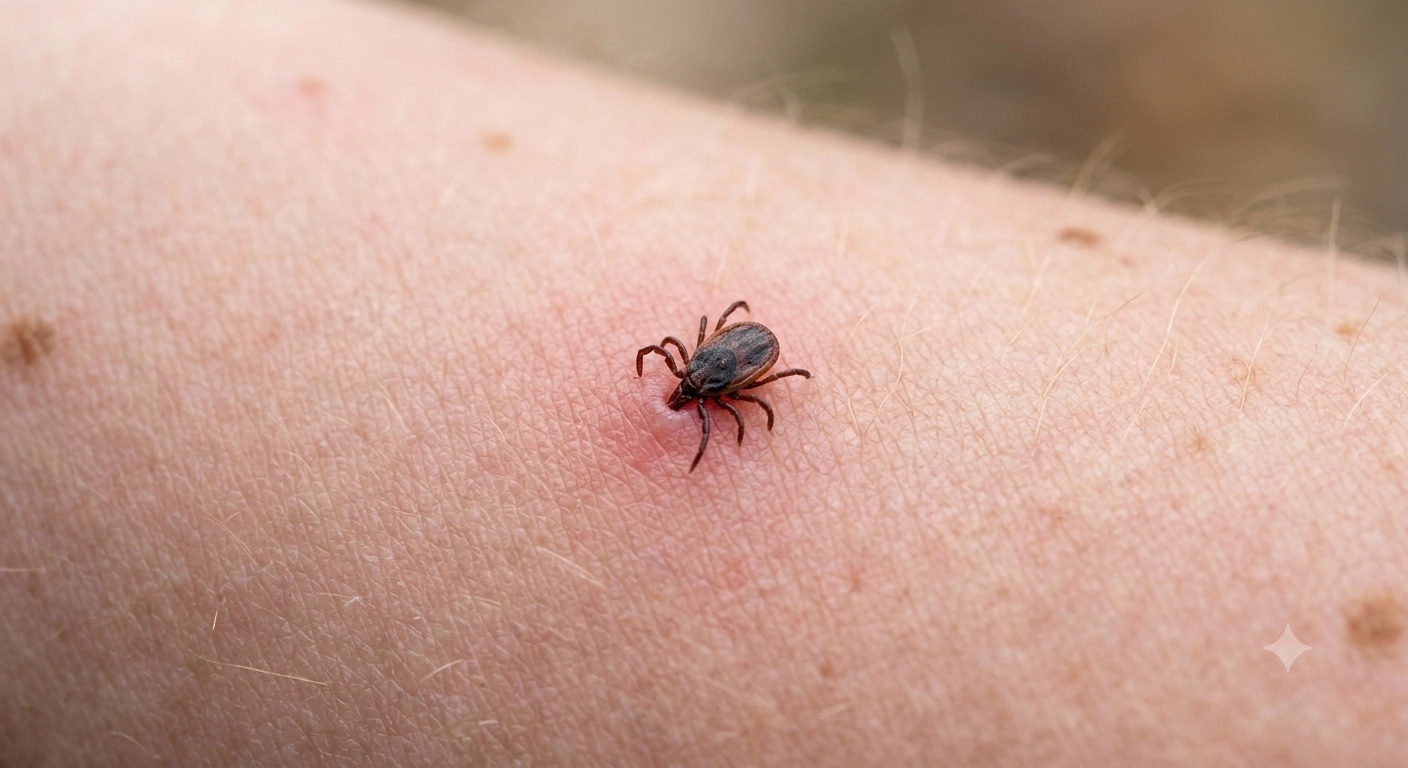
With the arrival of warmer months, tick activity increases. These tiny mites are commonly found in grass, bushes, forests, parks, and gardens. A tick bite is usually painless, which is why we often notice it only after several hours or days. Nevertheless, it is important to know how to protect yourself and how to proceed correctly if a tick attaches to you.
Why Are Ticks Dangerous?
Ticks can transmit a number of infectious diseases. In the Czech Republic, the most significant are:
-
Lyme disease – a bacterial infection that can affect the skin, nervous system, heart, and joints.
-
Tick-borne encephalitis – a viral disease attacking the brain and meninges. An effective vaccine exists against this disease.
How to Properly Remove an Attached Tick
-
Grasp the tick as close to the skin as possible using tweezers.
-
Carefully pull it straight up.
-
Disinfect the attachment site with a standard disinfectant.
-
Wash your hands.
Do not use oil, ointment, cream, or other substances to suffocate the tick. They can increase the risk of transmitting infections. The tick should be removed as soon as possible after discovery.
When to See a Doctor?
Visit a doctor if any of the following symptoms appear within several days to weeks after the bite:
-
an expanding red spot around the attachment site or elsewhere on the body
-
fever
-
headaches
-
fatigue
-
muscle and joint pain
-
neurological issues (numbness/sensory disturbances, severe headaches, stiff neck)
How to Protect Yourself?
The most effective prevention is avoiding tick bites altogether:
-
wear long trousers and sleeves when spending time in nature
-
use repellents
-
stick to the middle of trails
-
shower and inspect your entire body after returning home
-
check children and pets as well
Vaccination Against Tick-Borne Encephalitis
A safe and effective vaccine is available against tick-borne encephalitis, which significantly reduces the risk of a severe course of the disease. Consult your general practitioner about suitability. A routinely used vaccine against Lyme disease is not currently available.
Conclusion
An attached tick is no reason to panic, but it does require attention. Early removal, monitoring your health, and consistent prevention are the best protection against serious consequences. If you are unsure of the correct procedure or if health issues arise after a bite, contact your doctor.
Author of the article: MUDr. Jana Uherová

